

Examinations & check-ups
Routine exams to monitor teeth, gums and soft tissues.
Learn moreHow we work
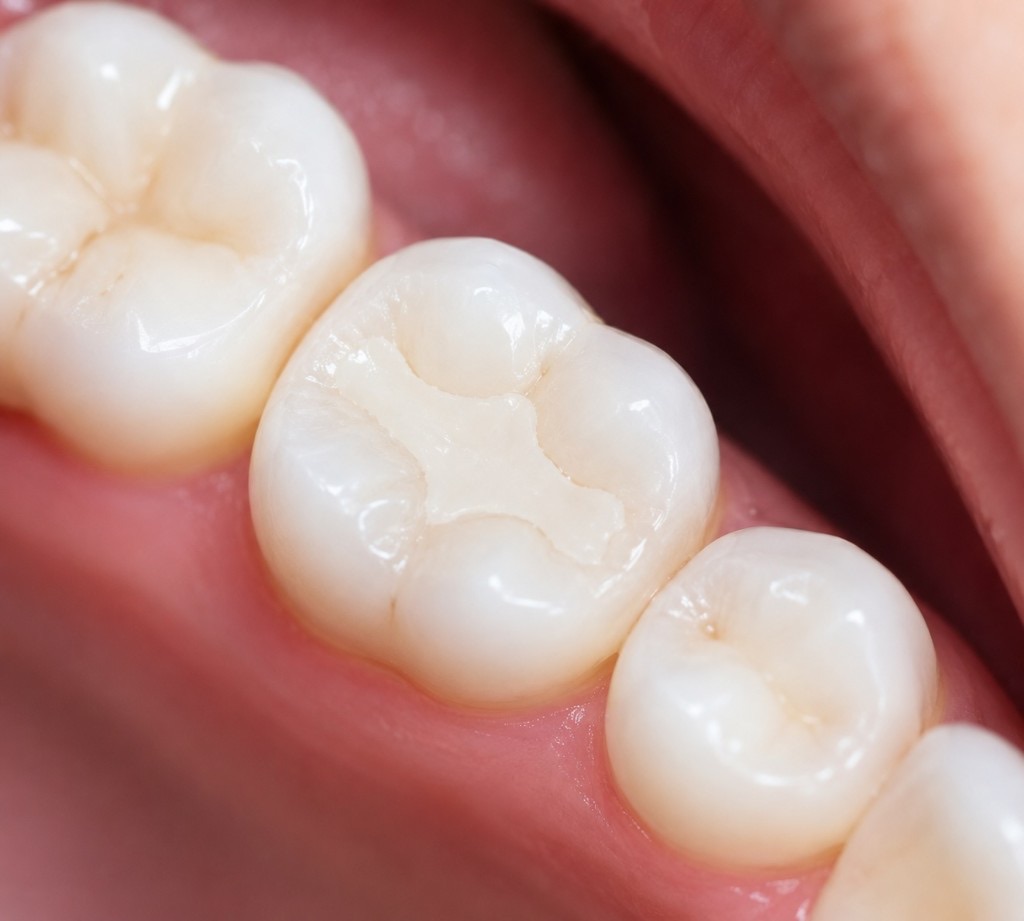
Tooth-coloured restorations that repair decay while blending with the natural look of your smile.
Honest suitability
A white filling works best when there is sufficient healthy tooth structure remaining to support a conservative restoration. We assess the size of the cavity, bite forces and remaining enamel before recommending the simplest durable option, which may be a filling, an onlay or a crown.
Patient benefits
Tooth-coloured restorations match natural enamel, preserve more healthy tooth than older alternatives, and are our standard of care across the practice.
Shade-matched in natural light and polished to the right surface texture, a well-placed white filling is genuinely difficult to detect.
Composite bonds to enamel and dentine, often reinforcing what remains rather than simply filling a hole.
The adhesive technique typically requires less healthy tooth removal than older alternatives, preserving more of what is yours.
Modern tooth-coloured materials restore decay or fractures without using amalgam.

We check the tooth, take X-rays if needed, and confirm whether a filling, onlay or crown is most appropriate.
Decay and old filling material are removed carefully.
The filling is layered, shaped to your bite and polished for a smooth, natural finish.
Home care advice. Guidance on brushing, diet and when to return if you notice sensitivity or a high bite.
Clinical assessment
The right restoration for a tooth depends on how much healthy structure remains and what bite forces the filling will face. These are the factors we assess before starting.
We measure how much tooth structure is affected and whether a filling is still the right restoration.
Heavy chewing loads on back teeth may mean a stronger material or crown is more appropriate.
Composite is layered to blend with your natural enamel so the repair is visually seamless.
The filling is shaped and polished so your bite feels natural and food does not trap between teeth.
Ask our principal dentist

Hi there 👋, send a short message about your treatment question and we'll reply on WhatsApp as soon as we can.
Guide fees
| Treatment | Fee |
|---|---|
| White fillings - composite / glass ionomer (depending on complexity) | £140–£250 |
| The exact fee depends on tooth size, position and materials used, confirmed before treatment starts. | |
Balanced options
Responsible dentistry means explaining every sensible option - not only the treatment you searched for.
Routine exams to monitor teeth, gums and soft tissues.
Learn moreProtect and restore weakened teeth.
Learn moreSave infected teeth with precision care.
Learn moreCommon questions
With good care, many last years. Lifespan depends on size, bite forces and oral hygiene.
We use local anaesthetic when needed. Mild sensitivity for a few days afterwards is common and usually settles.
We plan replacements clinically, not for appearance alone. We advise which teeth benefit most from replacement.
Modern composites are very strong for small to medium cavities. Large loads may need a crown instead.
Guide fees are £140–£250 depending on complexity. You receive a written estimate before we start.
Yes, glass ionomer and composite are commonly used in paediatric dentistry.
Use our online booking link or call reception. We will confirm appointment length, what to bring, and whether any preparatory steps are needed.
We provide written estimates from our published fee guide. If your clinical needs change after assessment, we discuss any difference before proceeding.
Composite is a tooth-coloured resin we layer and bond into the cavity. It is strong, polishable and the usual choice for most adult fillings. Glass ionomer releases fluoride and bonds well in some situations, and is often used in children’s dentistry or specific clinical scenarios. We recommend the material that suits your tooth’s size, position and bite, and confirm the fee before we start.
When a cavity is too large for a simple filling but the tooth still has enough healthy structure to avoid a full crown, an onlay can be a stronger middle option. It is a custom-made piece that covers one or more cusps of the tooth. We assess this at examination and explain whether a filling, onlay or crown is the most predictable long-term choice.
Hi there 👋, got a question about an appointment, treatment or your insurance? Send us a quick WhatsApp and we'll reply during opening hours.