

Dental implants
Long-term replacement for missing teeth.
Learn moreHow we work
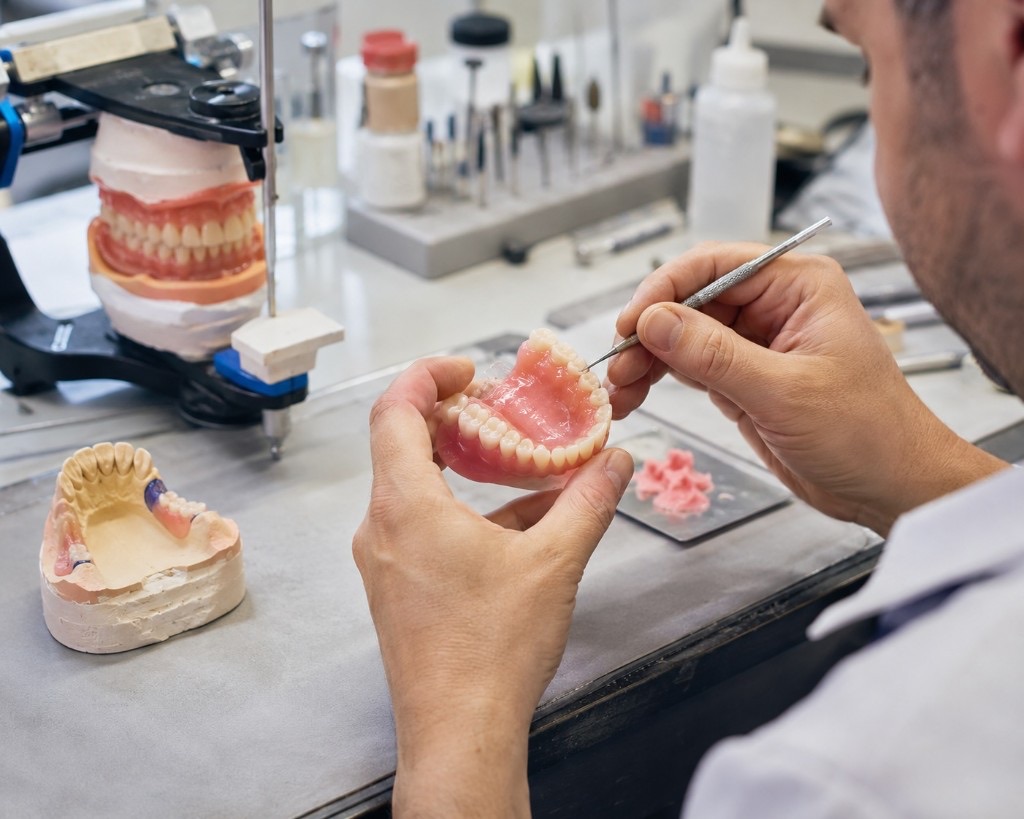
Modern partial and full dentures designed for comfort, stability and a natural appearance.
Honest suitability
Dentures are a practical, accessible solution for significant tooth loss, particularly when the timeline, health status or preference make implants unsuitable. We assess gum tissue health, bite and aesthetic requirements before recommending conventional or implant-supported designs.
Patient benefits
Well-made dentures restore confidence, facial support and chewing function, and when they are fitted well and followed up properly, they feel far more natural than patients often expect.
Digital scans, bite registration and try-in are all taken seriously. Rushing any stage produces a denture that never fits as well as it should.
Tooth position, vertical height and lip support are planned deliberately, not defaulted to. Well-made dentures improve how patients look as well as how they function.
For patients who want significantly better stability, snap-in dentures supported by implants change the daily experience of wearing them.
You can review appearance, bite and comfort before the final denture is finished.

We discuss goals, assess oral tissues and decide on full, partial or implant-retained designs.
A trial setup allows adjustments before final denture completion.
The denture is fitted and reviewed to improve comfort during adaptation.
Clinical assessment
Denture quality depends almost entirely on the accuracy of the clinical records taken before fabrication. These are the factors we assess carefully at each appointment.
We assess whether teeth can be retained, need removal, or whether an immediate denture is appropriate.
The gums and bone that will support the denture are examined for sore spots, shrinkage and stability.
Tooth position and vertical height are planned to restore speech, chewing and a natural appearance.
Where appropriate, we discuss whether implants could improve retention and reduce movement.
Ask our principal dentist

Hi there 👋, send a short message about your treatment question and we'll reply on WhatsApp as soon as we can.
Guide fees
| Treatment | Fee |
|---|---|
| Acrylic denture | From £1,600 |
| Chrome denture | From £2,000 |
| Flexible denture | From £1,800 |
| Full and partial dentures, immediate dentures and implant-retained options are quoted after digital scans and clinical assessment. | |
Balanced options
Responsible dentistry means explaining every sensible option - not only the treatment you searched for.
Long-term replacement for missing teeth.
Learn moreProtect and restore weakened teeth.
Learn moreRoutine exams to monitor teeth, gums and soft tissues.
Learn moreCommon questions
Several appointments over a few weeks for digital scans, try-in and fit.
Full dentures rely on suction and fit; implant-retained options move far less.
We usually advise removing them at night to let gums rest unless told otherwise.
Dentures typically last 5-7 years, but your gums and bone can change sooner. A reline resurfaces the fit inside the denture so it sits securely again without making a whole new set. We review fit at appointments and advise when a reline or replacement is the better option.
For many patients, yes, stability and comfort improve significantly.
Soft foods at first, then firmer foods as you adapt, implant dentures allow a wider diet sooner.
Use our online booking link or call reception. We will confirm appointment length, what to bring, and whether any preparatory steps are needed.
We provide written estimates from our published fee guide. If your clinical needs change after assessment, we discuss any difference before proceeding.
Conventional dentures rest on the gums and rely on suction and fit. Implant-retained, sometimes called snap-in, dentures clip onto dental implants placed in the jaw, giving far greater stability, especially for lower dentures. They still come out for cleaning. We discuss full, partial and implant options at consultation, including bone augmentation if scans show it is needed.
Hi there 👋, got a question about an appointment, treatment or your insurance? Send us a quick WhatsApp and we'll reply during opening hours.