

Porcelain veneers
Thinner ceramic restorations suit larger colour or shape changes with greater long-term stability.
Learn moreHow we work
Conservative, often one-visit repairs for chips, gaps and minor shape changes — matched carefully to your natural teeth.
Honest suitability
Bonding works beautifully when the change needed is conservative and the enamel and bite are supportive of it. We assess the amount of enamel available, how bite forces will affect the bonding, and whether the result would actually last, before recommending it as the right route for you.
Patient benefits
Patients choose composite bonding for its conservation, speed and cost, but the real reason it works is when the indication is right and the technique is careful.
Most of the natural tooth is preserved. In many cases no drilling is needed at all, making it one of the least invasive cosmetic options.
Shade matching, layering, shaping and polishing are all done at the same appointment for most cases.
When shade matching and surface anatomy are handled carefully, well-placed bonding is genuinely difficult to detect.
Small chips or worn edges can usually be polished or topped up without replacing the whole restoration.

Assessment and smile planning. We review your concerns, evaluate bite and enamel health, and confirm whether bonding is suitable.
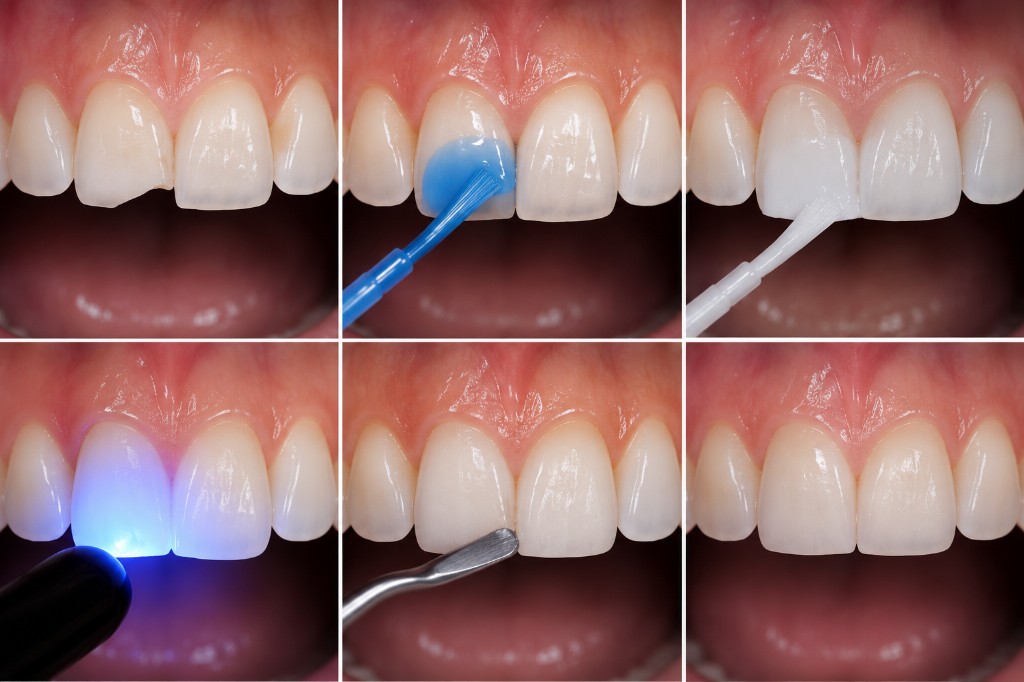
Shade match and bonding Teeth are prepared gently, resin is layered and shaped, then hardened with a curing light.
Polish and final refinements. We refine contours and polish to create smooth, natural-looking results.
Maintenance and reviews. Good hygiene, night guard use where needed, and regular reviews help keep bonding looking its best.
Clinical assessment
Bonding works best when the enamel, bite and aesthetic goals are well matched to what the material can achieve. These are the factors we consider before recommending it.
We check how much healthy enamel remains, whether edges are intact, and whether bonding can adhere predictably.
Heavy biting or grinding can shorten bonding lifespan. We assess how your teeth meet before recommending resin.
We discuss what you want to change and whether bonding alone can achieve it, or whether whitening or veneers fit better.
Decay, active gum inflammation or poor hygiene must be stabilised before cosmetic bonding begins.
Ask our principal dentist

Hi there 👋, send a short message about your treatment question and we'll reply on WhatsApp as soon as we can.
Guide fees
| Treatment | Fee |
|---|---|
| Composite bonding (per tooth) | £200–£300 |
| Emax cosmetic crown / veneer (larger changes) | £1,250 |
| Bonding is priced per tooth after a smile assessment. We compare bonding with veneers and crowns so you can choose confidently. | |
Balanced options
Responsible dentistry means explaining every sensible option - not only the treatment you searched for.
Thinner ceramic restorations suit larger colour or shape changes with greater long-term stability.
Learn moreWhitening first can improve shade before bonding so repairs match your desired brightness.
Learn moreStraightening may be recommended before bonding when position affects the final aesthetic result.
Learn moreCommon questions
With good care, many cases last several years; occasional polish or repair visits may be needed.
Composite can pick up stain over time, good hygiene and limiting coffee, tea and red wine helps.
Bonding does not lighten with whitening gel, plan whitening before bonding if needed.
Because little enamel is removed, bonding is more conservative than veneers, but not always fully reversible.
Bonding suits minor changes; veneers suit larger aesthetic goals and better long-term colour stability.
If you grind your teeth, a splint may be recommended to protect bonding and natural enamel.
Use our online booking link or call reception. We will confirm appointment length, what to bring, and whether any preparatory steps are needed.
We provide written estimates from our published fee guide. If your clinical needs change after assessment, we discuss any difference before proceeding.
Composite bonding uses tooth-coloured resin - the same family of material as many white fillings - built directly onto the tooth to improve shape, close small gaps, repair chips or refine edges. It is usually completed in one visit, with little or no drilling. It suits subtle changes; for larger or longer-lasting transformations we may discuss porcelain veneers or crowns instead.
Hi there 👋, got a question about an appointment, treatment or your insurance? Send us a quick WhatsApp and we'll reply during opening hours.