

Large filling or onlay
Smaller areas of damage may be restored without full crown coverage when strength allows.
Learn moreHow we work
Restore strength and shape to damaged teeth with carefully planned, natural-looking crowns.
Also available
When a tooth is missing, a bridge can restore the gap without an implant — using neighbouring teeth for support, or a Maryland design when a more conservative approach is suitable.
A conventional bridge replaces one or more missing teeth by linking a false tooth to crowns on the adjacent teeth. It is fixed in place and can restore chewing and appearance when the supporting teeth are strong enough.
A Maryland (resin-bonded) bridge uses a wing bonded to the back of a neighbouring tooth and often needs less preparation. It can suit carefully selected front-tooth gaps; your written plan will confirm whether this or a conventional bridge, implant or denture is the better long-term option.
Guide fees for Maryland bridges are listed on our pricing page. We always compare bridges with implants and dentures so you can choose with clear costs and trade-offs.
Honest suitability
A crown is the most protective restoration when a tooth needs more support than a filling can provide. We consider remaining tooth structure, bite forces, aesthetic requirements and the tooth's history before recommending one, and we compare onlays and large composite restorations when these would serve the tooth equally well.
Patient benefits
Patients choose crowns because they want protection that lasts, a bite that functions properly, and a result that blends naturally into the smile.
Root-treated and heavily filled back teeth are most at risk of catastrophic fracture. A crown reduces this risk substantially.
The shape and structural integrity needed for comfortable, efficient chewing is rebuilt to last.
E.max for aesthetics, zirconia for strength, gold where long-term durability on back teeth is the priority. We advise specifically.
Shade, shape and material are chosen to blend with surrounding teeth, not just cover the tooth.

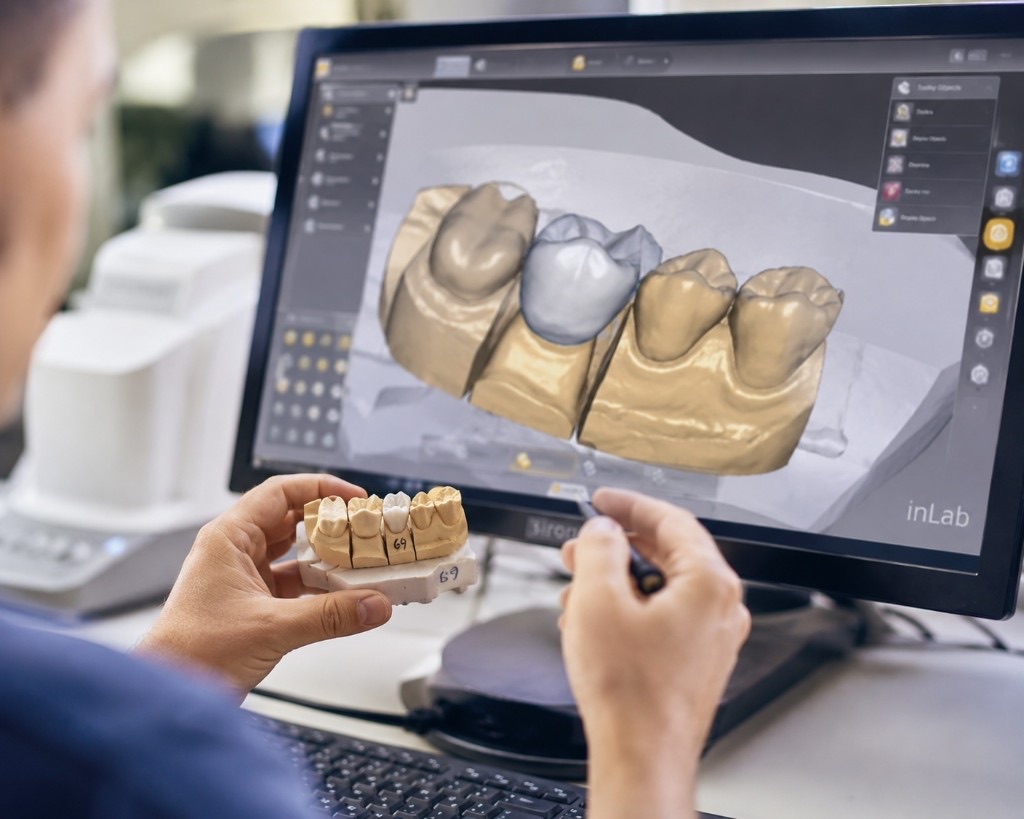
The tooth is prepared, shade selected and a digital scan is taken.
Your custom crown is produced in the chosen material.
contact points and bite are checked before final bonding.
maintenance Routine check-ups and hygiene help maximise crown lifespan.
Clinical assessment
A crown is recommended when it offers the tooth something a simpler restoration genuinely cannot. These are the factors we weigh at assessment.
We measure how much sound tooth remains and whether a crown is genuinely needed rather than a large filling or onlay.
X-rays confirm the root is healthy and any prior root canal treatment is sound before committing to a crown.
We assess how the tooth functions in your bite and which crown material will best withstand daily forces.
Shade, translucency and position in the smile line guide whether E.max, zirconia or another material is most appropriate.
Ask our principal dentist

Hi there 👋, send a short message about your treatment question and we'll reply on WhatsApp as soon as we can.
Guide fees
| Treatment | Fee |
|---|---|
| Emax cosmetic crown / veneer | £1,250 |
| Gold crown | From £1,450 |
| Post and core for crown | £200 |
| Crown recement | £180 |
| Material choice and tooth position are discussed at consultation. A temporary crown is included during laboratory work. | |
Balanced options
Responsible dentistry means explaining every sensible option - not only the treatment you searched for.
Smaller areas of damage may be restored without full crown coverage when strength allows.
Learn moreFront teeth with mainly cosmetic concerns may be suitable for a more conservative veneer.
Learn moreHeavily compromised teeth may be better replaced than repeatedly repaired.
Learn moreCommon questions
Often 10–20 years with good hygiene and bite protection.
Mild sensitivity for a few days is normal; persistent pain after two weeks should be checked.
We choose material based on where the tooth sits and how hard it works. Emax is a natural-looking ceramic for many front teeth and side teeth. Zirconia offers excellent strength for back teeth under heavy bite forces. Gold remains a reliable option where appearance matters less. We discuss the trade-offs for your tooth in plain language at consultation.
Rarely, avoid sticky foods and attend reviews if you notice movement.
Crowns cover the whole tooth when strength is needed; veneers cover the front for cosmetic change.
Usually 2–3 weeks while the laboratory makes your crown.
Use our online booking link or call reception. We will confirm appointment length, what to bring, and whether any preparatory steps are needed.
We provide written estimates from our published fee guide. If your clinical needs change after assessment, we discuss any difference before proceeding.
If a tooth is badly broken down after root canal treatment or decay, there may not be enough structure left to hold a crown securely. A post and core rebuilds the centre of the tooth so the crown has something solid to bond to. We only recommend it when it is clinically necessary, and it is quoted separately on your plan.
Hi there 👋, got a question about an appointment, treatment or your insurance? Send us a quick WhatsApp and we'll reply during opening hours.