

Dental bridge
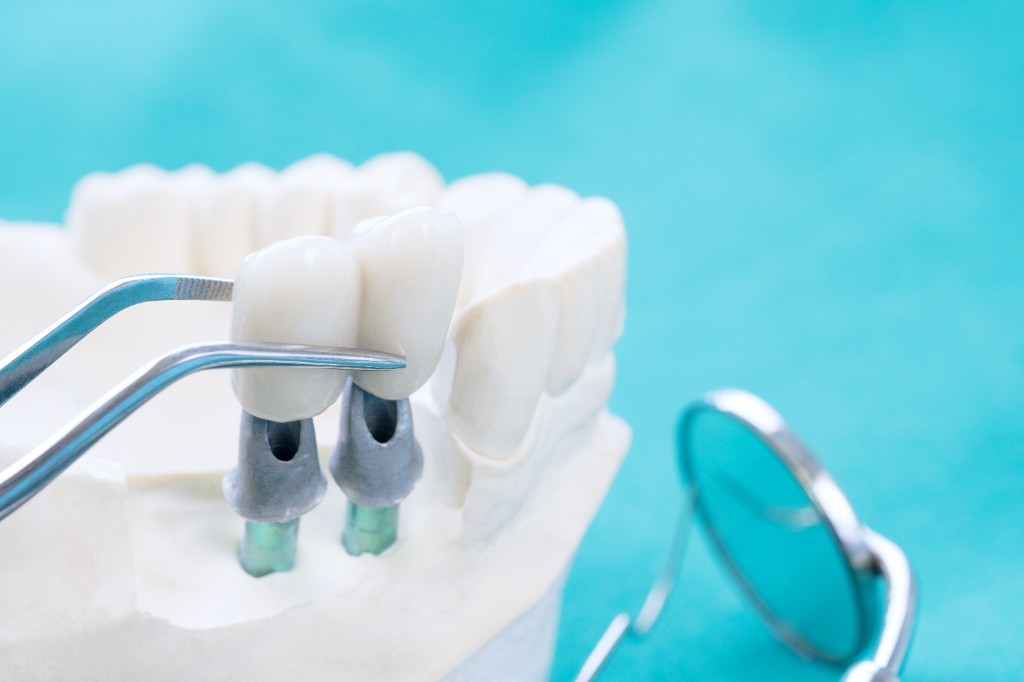
A fixed bridge can replace one or two missing teeth when adjacent teeth are strong enough to support it.
Learn moreHow we work
Replace missing teeth with titanium implants, planned with 3D imaging and restored for natural function.
Honest suitability
Implants can be an excellent long-term solution for missing teeth, but suitability depends on bone volume, gum health, bite stability and medical history. We assess each of these carefully before comparing implants with bridges or dentures, so your decision is fully informed rather than based on what sounds most appealing.
Patient benefits
Patients choose implants because they want something that functions and feels like a real tooth, stable, independent of adjacent teeth and capable of lasting decades. Here is what consistently matters when weighing implants against the alternatives.
The only tooth replacement that stimulates the jawbone and slows the resorption that follows extraction.
No adhesives, no removal, no movement. Implants function and feel closer to natural teeth than any other option.
Unlike a bridge, no neighbouring teeth are prepared or crowned down to support the restoration.
Implants are planned to restore chewing, appearance and stability with a solution designed to last.

We assess health, gum condition and bone volume, then confirm your treatment options.
The titanium post is placed under local anaesthetic, with aftercare instructions for healing.
integrates with the implant over the following weeks to months.
A digital scan is taken and your final restoration is fitted for function and aesthetics.
Clinical assessment
The most important decisions in implant treatment happen at assessment, not in surgery. These are the factors that shape every plan we make.
CBCT or detailed x-rays confirm whether there is enough bone to support an implant, or whether grafting is needed first.
Active periodontal disease must be controlled before implant placement to protect long-term success.
We review medications, smoking, diabetes and other factors that can influence integration and recovery.
The planned crown, bridge or denture is considered from the start so the implant position supports the final result.
Ask our implant dentist

Hi there 👋, send a short message about your treatment question and we'll reply on WhatsApp as soon as we can.
Guide fees
| Treatment | Fee |
|---|---|
| Implant consultation (incl. x-rays) | £170 |
| Dental implant (incl. crown) | £3,000–£3,500 |
| Bone augmentation | Price on consultation |
| Your plan lists implant brand, temporaries, laboratory work and review appointments. The crown is included in the implant fee. Finance may be available on larger plans. | |
Balanced options
Responsible dentistry means explaining every sensible option - not only the treatment you searched for.
A fixed bridge can replace one or two missing teeth when adjacent teeth are strong enough to support it.
Learn moreRemovable dentures restore appearance without surgery and suit patients who prefer a non-surgical route.
Learn moreWhere appropriate, we may advise delaying replacement while protecting surrounding teeth and bone.
Learn moreCommon questions
Most healthy adults with enough bone qualify, we assess smoking, diabetes and medications at consultation.
Often 4–6 months from placement to final crown, depending on healing and complexity.
Placement is under local anaesthetic; mild swelling for a few days is common.
Grafting or sinus lift can often make implants possible, confirmed on 3D scan.
Brush, use interdental aids and attend hygiene, we show techniques for your restoration type.
Implants offer superior stability and bone support; dentures cost less upfront but may need relining and adhesives.
Use our online booking link or call reception. We will confirm appointment length, what to bring, and whether any preparatory steps are needed.
We provide written estimates from our published fee guide. If your clinical needs change after assessment, we discuss any difference before proceeding.
A dental implant is a small titanium post placed in the jaw to replace a missing tooth root. Over several weeks the bone bonds to it - a process called osseointegration - creating a stable foundation for a crown, bridge or denture. It is planned from detailed assessment and 3D imaging where needed, and every stage is explained in your written plan before treatment starts.
Bone augmentation means adding bone or bone substitute material where the jaw is too thin or short to support an implant safely. It can be done at implant placement or as a separate stage, depending on your scan. If augmentation is needed, we explain why, outline the options - including sinus lift where the upper back jaw is involved - and quote it in writing before you commit.
Once your implant has healed, a custom crown is attached to the implant post, the part you actually chew on. Crown materials vary depending on bite, position and aesthetics, and the crown is included in the implant fee. We discuss this when we plan your final restoration.
Hi there 👋, got a question about an appointment, treatment or your insurance? Send us a quick WhatsApp and we'll reply during opening hours.