

Dental crown
Back teeth usually need a crown after root canal treatment to reduce fracture risk.
Learn moreHow we work
Save infected or badly damaged teeth with precise root canal treatment and a clear restoration plan.
Honest suitability
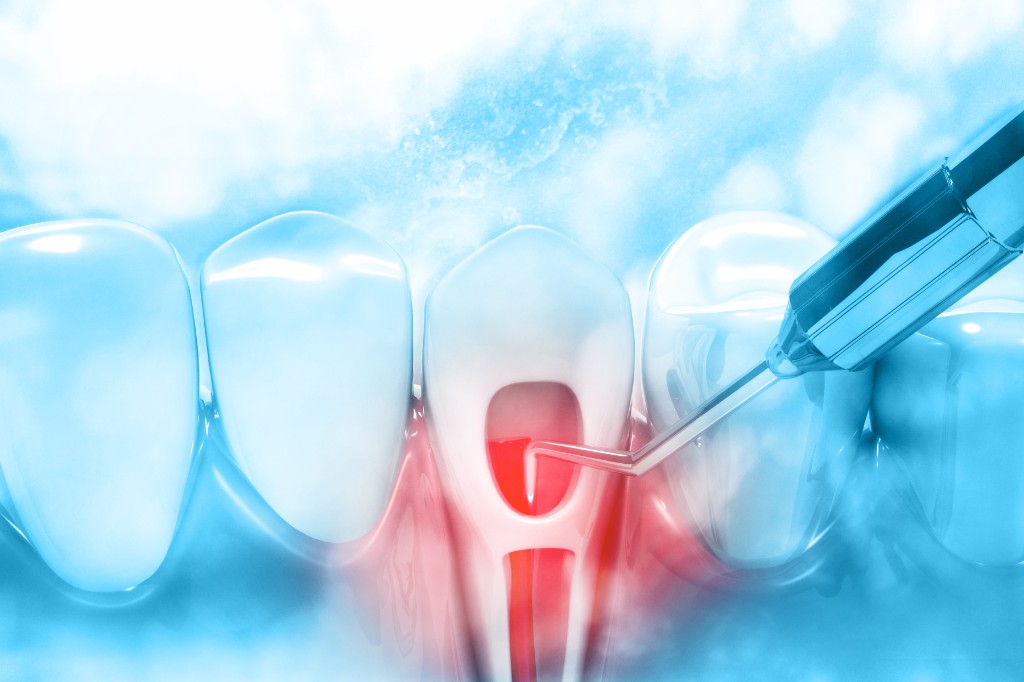
Root canal treatment is considered when a tooth has inflamed or infected pulp tissue but is still worth saving. Prognosis depends on remaining tooth structure, root anatomy, bone support and what restoration is planned afterwards. We assess all of these before recommending treatment.
Patient benefits
Keeping a natural tooth is almost always the most cost-effective long-term decision, and with the right technique, root canal treatment gives most teeth an excellent prognosis.
Nothing replaces a natural tooth as completely, as cost-effectively, or as comfortably as a well-treated and restored tooth.
Up to 25x magnification allows us to find and clean the fine canal anatomy that is responsible for most treatment failures.
The bacteria causing pain or abscess are removed from inside the tooth, not just suppressed with antibiotics.
We plan the final filling or crown so the tooth is protected after infection is removed.

We confirm diagnosis, explain options and agree whether root canal or extraction is best.
disinfection Under local anaesthetic, infected tissue is removed and root canals are cleaned, shaped and disinfected.
Canal filling and seal Canals are sealed to reduce re-infection risk, then the tooth is rebuilt.
A crown is often recommended for back teeth to protect against fracture.
Clinical assessment
Root canal treatment is only as good as the diagnosis that precedes it. These are the factors we evaluate before confirming that treatment is appropriate and likely to succeed.
We distinguish reversible sensitivity from irreversible pulp damage before recommending root canal treatment.
Radiographs reveal infection at the root tip, canal shape and whether treatment is likely to succeed.
A tooth needs enough structure after treatment to hold a filling or crown long term.
We confirm how the tooth will be protected afterwards, often with a crown for back teeth.
Ask our principal dentist

Hi there 👋, send a short message about your treatment question and we'll reply on WhatsApp as soon as we can.
Guide fees
| Treatment | Fee |
|---|---|
| Root canal consultation (incl. small x-rays) | £99.50 |
| Incisors / canines / premolar | From £995 |
| Molar | From £1,100 |
| First stage (pain alleviation) | £500 |
| Crown (often recommended after) | From £1,250 |
| Fees reflect tooth type and complexity. A crown is usually advised on back teeth to protect the tooth long term. Crown materials vary. | |
Balanced options
Responsible dentistry means explaining every sensible option - not only the treatment you searched for.
Back teeth usually need a crown after root canal treatment to reduce fracture risk.
Learn moreWhen prognosis is poor, removal and replacement planning may be the more predictable option.
Learn moreEarly symptoms are sometimes managed conservatively until a definitive diagnosis is confirmed.
Learn moreCommon questions
Treatment is done under local anaesthetic so there is no pain during the treatment. Some tenderness afterwards is normal. Rest is ok.
Each visit typically takes 60–120 minutes; complex molars may need two visits.
Root-treated teeth are more brittle, a crown protects against fracture when chewing.
Retreatment or referral may be possible; extraction is a last resort if the tooth cannot be saved.
Upfront yes, but replacing the tooth with an implant or bridge often costs more long term.
Yes, unless you have had sedation, which requires an escort. We will check your health, comfort and expectations carefully, then explain whether this is a good fit for you.
Use our online booking link or call reception. We will confirm appointment length, what to bring, and whether any preparatory steps are needed.
We provide written estimates from our published fee guide. If your clinical needs change after assessment, we discuss any difference before proceeding.
Root canal treatment removes infection from inside a tooth - the pulp, which contains nerves and blood vessels - then cleans, disinfects and seals the root canals. It lets you keep a tooth that might otherwise need extraction. We use careful isolation and magnification to work precisely, and we discuss prognosis honestly before you commit.
If you are in acute pain, we may start with a first-stage visit to relieve symptoms: opening the tooth, removing the source of infection and placing a temporary dressing. This is not the full treatment. Once you are comfortable, we complete cleaning, sealing and the definitive restoration, often a crown on back teeth, in further visits. We explain which stage you are at and what the full plan involves before we begin.
A root-treated tooth is more brittle, especially when chewing. A crown wraps the tooth to protect it from splitting. Crown materials vary, and we confirm whether a crown, onlay or filling is most appropriate before treatment is finished.
Hi there 👋, got a question about an appointment, treatment or your insurance? Send us a quick WhatsApp and we'll reply during opening hours.